

—
By: Jennifer Hart—————————————————————————————————————Updated: Mar 14, 2026
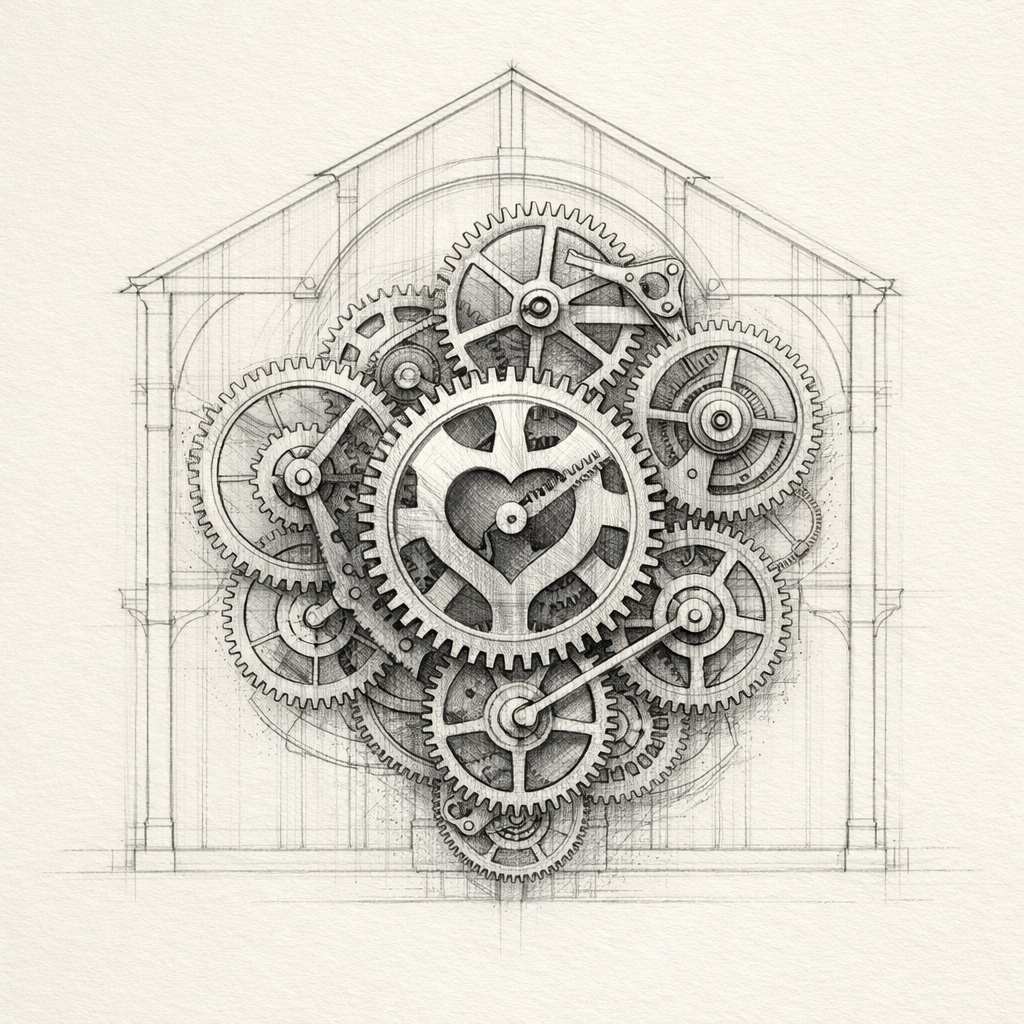
In the world of professional developmental editing, we often talk about the “Skeleton” of a story, those fifteen essential structural beats that hold a narrative upright. But once the foundation is poured and the load-bearing walls are set, a new, more elusive challenge emerges. It appears every month in the manuscripts that cross the desk: books that are structurally perfect but feel “thin.” They have the logic, but they lack the atmosphere. They have the mechanics, but they lack the soul.
Inside This Masterclass: Narrative Depth & Subtext
-
The Invisible Blueprint: Navigating the “White Space” between the lines of your prose.
-
Subtextual Engineering: Applying the “Discrepancy Principle” to create realistic dialogue.
-
Evolutive Symbols: Using structural anchors to track character transformation visually.
-
The Voice Pivot: Evolving your prose frequency to match the hero’s psychological arc.
-
Mirror Settings: Transitioning environments to reinforce internal psychological pressure.
-
The Dialectic Engine: Treating conflict as a high-stakes clash of opposing philosophies.
-
The After-Image: Engineering unpaid “Narrative Debts” to ensure long-term resonance.
The Invisible Blueprint
A true masterpiece isn’t found only in what is said and done; it exists in the “White Space” between the lines. This is the Invisible Blueprint. It is the layer of subtext, symbolic resonance, and stylistic DNA that transforms a functional plot into a visceral experience. To reach the pinnacle of the craft, an author must understand that structure is not just about what happens, it is about how the reader feels about what happens.
In the weakest manuscripts, characters often say exactly what they mean. They are honest, transparent, and, consequently, boring.
In reality, human beings rarely speak the truth directly. We speak in circles, we use sarcasm as a shield, and we hide our deepest needs behind mundane requests. In professional storytelling, we call this Subtextual Engineering.
When evaluating a scene, one looks for the “Discrepancy Principle.” For every line of dialogue, there must be an underlying current that contradicts or complicates the surface meaning. If a character says, “I’m fine,” but the structural map tells us they are at their Total Collapse (Step 8), that “fine” carries the weight of a mountain. Subtext is the tension between a character’s Internal Saboteur and the external mask they wear to survive. Without this layer, scenes will feel like melodrama; with it, they feel like life.
The Evolutive Symbol
One of the most powerful tools in an architect’s arsenal is the Evolutive Symbol. Symbols are not “decorations” added during a second draft; they are structural anchors that track the character’s transformation in a tangible way.
Consider a manuscript where the protagonist is obsessed with an old, rusted key. In the first act, while he is still ruled by his Internal Saboteur, the key represents his “armor”, the secrets he keeps to stay safe. By the Midpoint Pivot, the key is lost, mirroring his loss of control. In the Climax, he doesn’t find the key; he breaks the lock.
This is the “Symbolic Echo.” By choosing an object or a setting and allowing its meaning to change as the character changes, a sense of cohesion is created that the reader feels instinctively. It reinforces the truth of the Transformation (Steps 5 through 9) without the author having to “explain” the change. If the internal shift can be shown through the physical world, the prose gains a level of authority that no amount of adjectives can provide.
A Note for Authors: The transition from a 4,500-word blueprint to a 100,000-word draft is where most “plotters” lose their way. They become so enamored with their 15-step map that they forget to let their characters breathe. Outlines should not be treated like a cage, but rather a sanctuary. The role of the blueprint is to handle the logic so that the “Muse” can handle the emotion. If the structural reason for a scene’s existence is known, the focus can shift entirely to how it feels.
Misdirection Architecture
A master storyteller plays a game of chess with the reader’s intuition. This is called “Misdirection Architecture.“ At the 25% mark, the reader should think the story is about one thing; at the 50% mark, a deeper layer is revealed; and by the 75% mark, they realize it was always about something else entirely.
Information is the currency of the novel. But in this invisible layer of the craft, we must talk about the Psychology of Curiosity.
The concept of “Narrative Debt“ refers to the information owed to the reader. If a loop is opened, a mystery, a secret, a tension, a debt is created. Professional pacing is the art of paying off those debts at exactly the right moment. If they are paid too early, the tension vanishes (Dopamine drop). If they are paid too late, the reader becomes frustrated (Cortisol overload). Balancing this ledger is what makes a book “unputdownable.”

How Prose Evolves with the Arc
A subtle but devastating flaw often found in manuscripts is static prose, where the tone on page one remains identical to the tone on page three hundred. When a protagonist undergoes a profound internal transformation, moving from the Internal Saboteur to the Moment of Truth, the very language of the book must evolve to reflect that shift.
This is the Voice Pivot. In the first act, the prose should mirror the character’s psychological constriction. If they are ruled by fear or a need for control, the sentences might be shorter, more clinical, or perhaps overly descriptive of mundane details, reflecting a mind trying to anchor itself in the “Normal World.”
As the story hits the Midpoint Pivot (Step 7), the prose must begin to “open up.” The metaphors should become more expansive, the rhythm more urgent. By the time the Total Collapse (Step 8) is reached, the language itself should feel fractured, mirroring the character’s broken armor. If the prose doesn’t evolve, the reader feels a disconnect between the “what” and the “how.” A professional architect doesn’t just change the plot; they change the frequency of the communication.
Dialogue is the most dangerous tool in an author’s kit. It can either accelerate the narrative or grind it to a halt. When auditing a manuscript’s dialogue, one looks for the Triple-Tasking Rule. A single line of dialogue must simultaneously:
- Move the Plot forward (The External Want).
- Reveal Character (The Internal Saboteur).
- Establish Tone or Theme (The Invisible Blueprint).
If a character says, “The train is late again,” it’s a wasted line. But if they say it while staring at their wedding ring after a fight, it becomes a metaphor for their failing marriage.
Some writers think “realistic” dialogue means writing exactly how people talk, including the “umms,” “ahhs,” and small talk. But professional dialogue is Distilled Reality. It is the essence of a conflict compressed into a few exchanges. If a scene feels “slow,” cutting the first three and last three lines of every dialogue exchange often doubles the tension instantly.
Architecture Beyond the Character
We often think of “Setting” as a backdrop, but in a world-class narrative, the setting is a functional part of the structural map. It acts as a Mirror Setting.
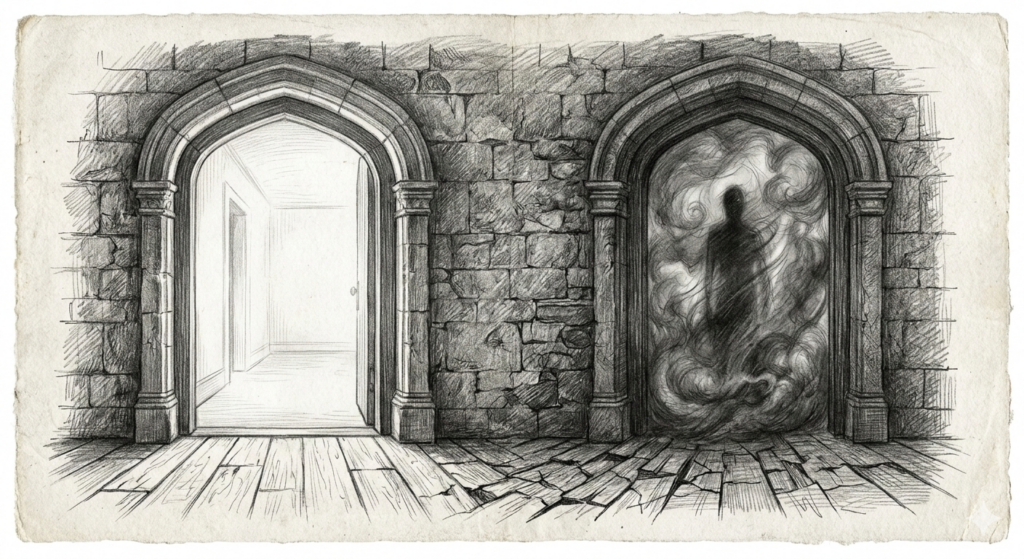
In the first act, the environment should reinforce the hero’s “Normal World.” It feels safe, perhaps even stagnant. But as the story moves into the Crucible (Step 6), the setting must become hostile or unfamiliar. It should actively challenge the hero’s ability to remain the same.
The Empathy Bridge
In a high-stakes narrative, the setting can physically “shrink” as the protagonist’s choices become more limited. For instance, transitioning from wide-open spaces in Act I to a windowless basement by the Total Collapse (Step 8) is not mere “flavor”, it is structural reinforcement. If the physical world does not reflect the psychological pressure of the arc, the story risks taking place in a vacuum.
The biggest mistake often seen from debut authors is “Over-Explaining.” They are so afraid the reader won’t “get it” that they solve the mystery before the reader has even had a chance to wonder.
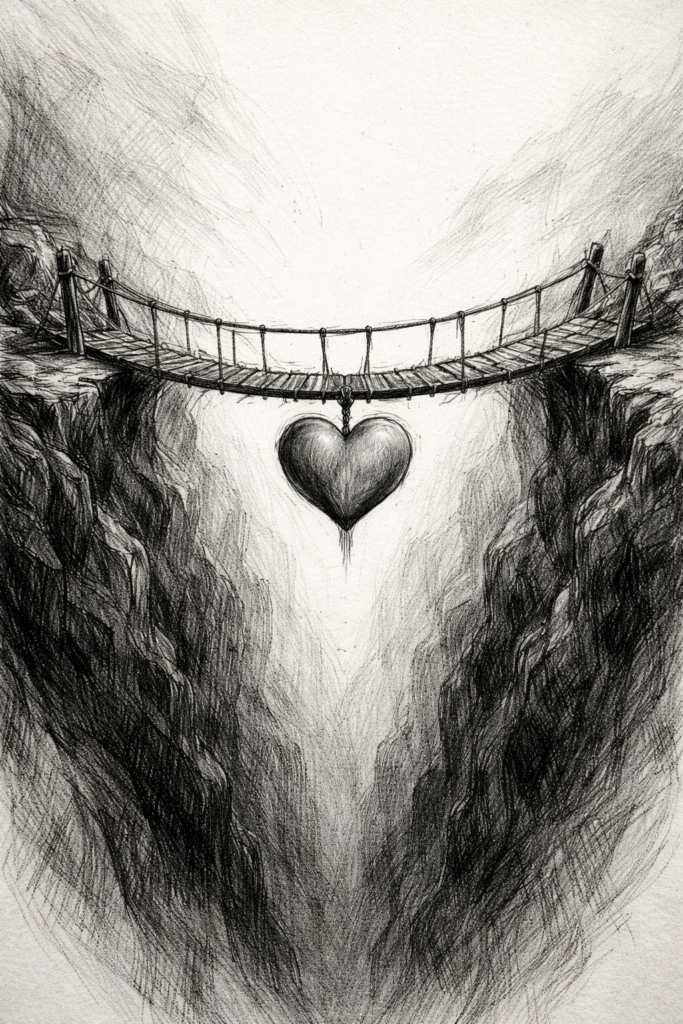
If a seed is planted at the 12% mark (The Disruption), its full significance should not be explained until the 75% mark (The Collapse). This creates a “tension gap.” The reader stays engaged because they are subconsciously trying to bridge that gap. The job of the architect of the invisible is to keep the bridge just long enough to be exciting, but not so long that the reader gives up.
In the high-stakes environment of a developmental edit, even technically perfect scripts can fail because they lack an “Empathy Bridge.“ If the first article discussed was about the skeleton of the story, this is about the blood flow. One can have a perfect 15-step structure, but if the reader isn’t psychologically tethered to the protagonist’s internal struggle, the structure is just an empty cage.
When auditing a manuscript, one looks for how the author handles the “Knowledge Gap.” There is a delicate, three-way relationship between what the character knows, what the reader knows, and what the antagonist knows.
Suspense, Dread, and the Knowledge
When the reader is aligned exactly with the protagonist’s ignorance, Suspense is created. When the reader is given information the protagonist lacks, Dread is created. Manuscripts often fail when these gaps are accidentally collapsed too early. If the reader knows the “Truth” at the same time the hero does in every single scene, there is no psychological tension. The “Invisible Blueprint” must be used to decide which emotional state the reader should be in. Are they mourning with the hero, or are they screaming at the page for the hero to turn around?
Consider a thriller where the author keeps the reader in total darkness alongside the hero for 300 pages. By page 150, the reader isn’t intrigued; they are exhausted. Opening a “window of dread”, showing the antagonist’s move to the reader only, changes everything. Suddenly, every mundane action the hero takes becomes terrifying. The plot remains the same, but the reader’s psychological proximity to the danger is transformed.
Beyond the “Pacing” discussed in structural maps, there is the Micro-Pressure of the prose itself. In a masterclass-level manuscript, the very length of paragraphs and the complexity of syntax should act as a valve for narrative tension.
In Act I, during the establishment of the Normal World, prose can afford to be lush and expansive. As the world is being built, the reader needs to feel the texture of the environment. But as the story moves into the Crucible, the prose must undergo a process of “Compression.”
This involves “Sentence Fracking“, breaking down long, lyrical thoughts into jagged, percussive statements. When a character is under extreme psychological pressure (approaching their Total Collapse), they don’t have the mental bandwidth for flowery metaphors. Their world is shrinking to the immediate, the urgent, and the physical.
Conversely, after a major Sequel (the emotional aftermath of an action), the prose must “Decompress.” This is the release valve. If the pressure is kept at 100% for the entire book, the reader becomes numb. The “Silence” in the prose must be architected just as carefully as the “Noise.” Often, the most powerful moments in a book aren’t the explosions, but the hollow, quiet paragraphs that follow them, the moments where the prose allows the reader to finally feel the weight of what just happened.
Conflict as a Philosophical Crisis
For a manuscript to possess true psychological weight, the conflict must be Dialectic. It must be a clash of two opposing, yet equally valid, philosophies.
This is the hidden engine of the Invisible Blueprint. While the structural map tracks the hero’s movements, the thematic map tracks the collision of values. If a protagonist believes that “loyalty is the highest virtue” and an antagonist believes that “truth is more important than loyalty,” it is no longer a “good guy versus bad guy” scenario. It is a philosophical crisis.
Every scene should function as a micro-debate of this dialectic. A “functional” but uninspired scene often occurs when characters are fighting only over a physical object, a briefcase or a secret code. When the conflict shifts to the meaning of that object and what it represents to their internal journey, the prose gains a resonant frequency. This elevation ensures the story transcends its genre, whether thriller or romance, to become a meditation on the human condition.
The “Shadow“ in psychology represents the parts of ourselves we refuse to acknowledge. In professional storytelling, the antagonist is the literal manifestation of the protagonist’s shadow. But to make this resonance work, the antagonist must possess “Narrative Grace.”
A one-dimensional villain is a structural failure. To avoid a hollow victory at the Climax, the antagonist must possess a “Point of Empathy“, a logic behind their choices that the reader can comprehend. The antagonist functions as a cautionary tale: they represent the version of the hero who failed to make the right choice at their own Moment of Truth.
By giving the antagonist a “Mirror Arc,” a dual-track narrative is created. The reader isn’t just rooting for the hero to win; they are watching a tragic deconstruction of what the hero could have been. This creates a sense of “Inevitable Tragedy” that adds a layer of sophistication to the prose. When these two characters meet in the final act, they aren’t just fighting; they are recognizing each other. That recognition is where the “Prestige” of the manuscript resides.
Mastering Narrative Relief
One of the most delicate tasks in managing the Psychological Weight of a story is knowing when to let the reader breathe. This is Narrative Relief Architecture. If tension is kept at a maximum for three hundred pages, it does not create excitement; it creates fatigue. The human brain is biologically incapable of maintaining high-level cortisol for extended periods without experiencing “Narrative Numbness.”
The structural map must account for “Valleys“, quiet moments of Sequel between the high-pressure peaks of the Midpoint and the Total Collapse. These scenes are not “filler”; they provide the reader with a moment of vulnerability and reflection, cementing empathy for the character. Without these internal beats, the external peril loses its emotional weight.
Pacing is not merely speed; it is the control of speed. Slowing the narrative to focus on the texture of a meal or the rhythm of a conversation allows the reader to form an emotional bond with the protagonist. When the chaos returns, the stakes feel significantly higher because there is now a genuine emotional investment to lose.
As the final resolution of a masterclass-level manuscript approaches, one must consider the After-Image. This is the thought that remains in the reader’s mind after the physical book is closed.
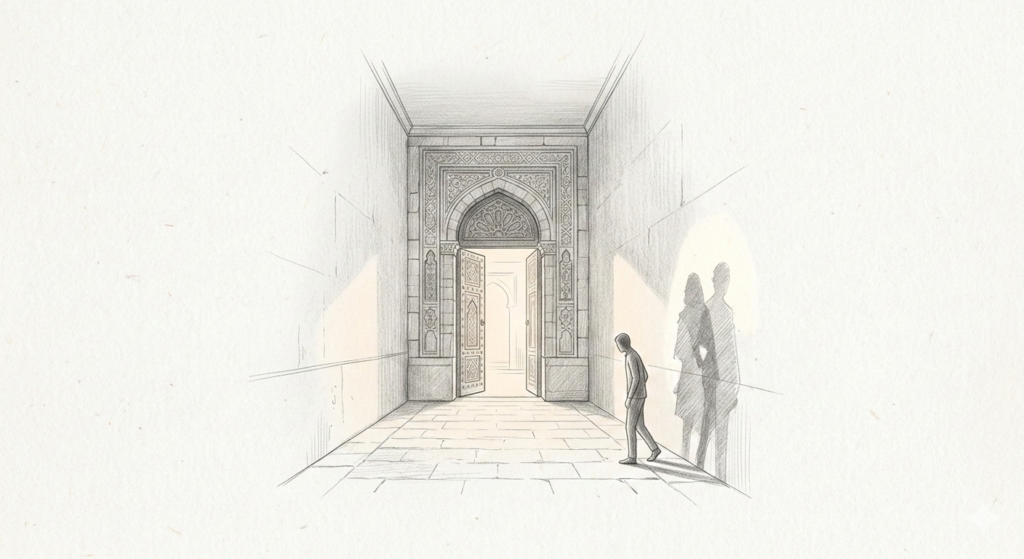
The Invisible Blueprint is not complete until the Thematic Echo has been engineered. This is not a “moral of the story”, modern, storytelling avoids preachy or simplistic conclusions. Instead, it is a lingering question: Did the hero truly win? Was the sacrifice worth the Truth? By leaving a small “Narrative Debt” unpaid, a question the reader must answer for themselves, the story continues to live in their imagination long after the final page.
This is the mark of a truly resonant work: structure provides the logic, subtext provides the soul, and the lingering echo provides the legacy. The ultimate purpose of this architecture is to build a bridge so strong that the reader can walk across it into a new understanding of their own world.
The blueprint is complete. The logic is unshakeable. Now, the heavy lifting of structure ends, and the true art of storytelling begins.