

–
By: Jeff Mayer———————————————————————————————————-Updated: Mar 14, 2026

A writer’s early years are usually spent obsessing over the “what” of a story. What happens first? What the character wants. What the twist is going to be somewhere around page two hundred.
–
Inside This Masterclass: What transforms a chapter from information into experience?
-
What narrative decisions give a chapter psychological weight?
-
How do you design a chapter that truly lives in the reader’s mind?
-
What turns chapters into visceral human experiences?
-
Can your chapters fundamentally shift reader consciousness?
-
What makes a chapter feel vivid, immediate, and deeply human?
-
How do chapters hold tension across different genres?
-
What ignites the structural pulse of a living story?
But somewhere along the road, usually after a few manuscripts, a few editorial letters, and perhaps a bruising conversation with a developmental editor, the focus shifts. The real question stops being what the story is about and becomes something more subtle:
How the story arrives in the reader’s hands.
That transition, from storyteller to craftsman, is where writers begin to understand something essential about chapters. They aren’t just containers for scenes. They are delivery systems. They regulate the reader’s experience the way valves regulate pressure in a complex machine.
And nowhere is this more visible than in the genres where world-building becomes the primary engine of storytelling. But when a reader opens a Science Fiction novel, they’re stepping onto alien soil.
Science Fiction and Fantasy operate on a different narrative contract than most genres. When a reader opens a thriller, they expect to recognize the world immediately. The streets look familiar. The rules of physics remain politely intact. The writer’s job is to disturb that world with conflict. The gravity might be different.
The politics might span galaxies. The social order might be governed by technologies that haven’t been invented yet. In that environment, the chapter becomes something more than pacing; it becomes structural hospitality.
You are welcoming the reader into a place they’ve never been before. In what is often called Hard Science Fiction, chapters frequently behave like briefings. Not dull lectures, but carefully layered explanations of systems the reader must understand in order for the story to function. Slipstream propulsion, artificial ecologies, alien social hierarchies, and the economic logic of interstellar trade routes require narrative space to become coherent.
Cut those chapters too aggressively in pursuit of thriller-style pacing, and something unfortunate happens. The reader stops feeling curious and starts feeling lost. And while readers of American science fiction have a remarkable tolerance for complexity, they have almost no patience for confusion. They will happily stay with you through an eight-thousand-word chapter if that chapter finally reveals how the dystopian world actually works.
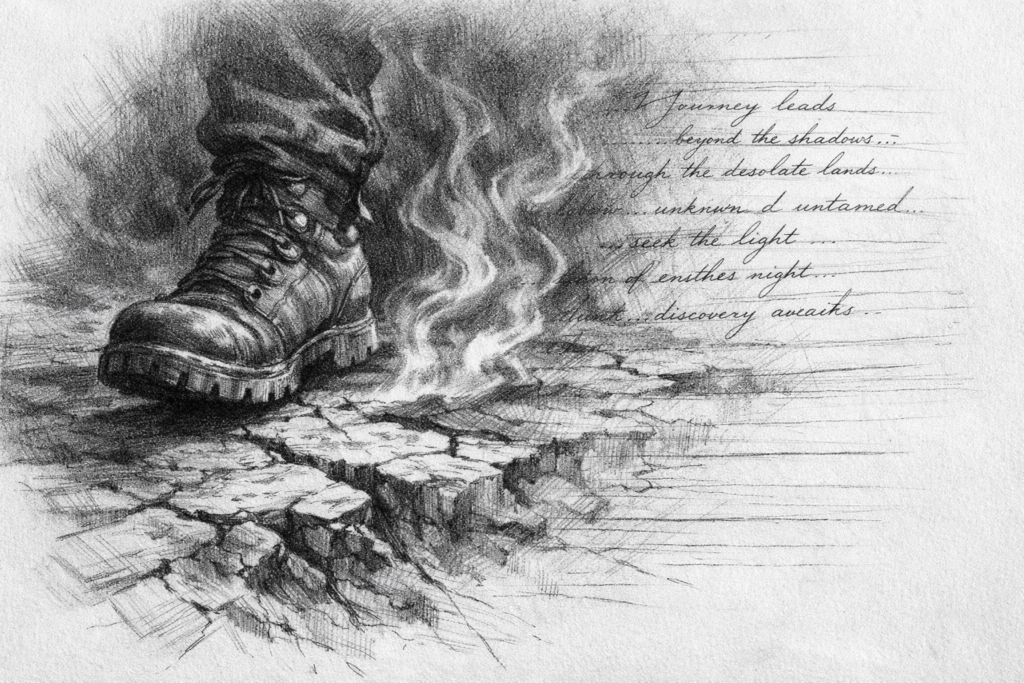
But once the explanation has done its job, the narrative must pivot. Exposition opens the door. Action must eventually walk through it.
Romance and the Architecture of Emotional Tension
Romance remains one of publishing’s most dependable ecosystems. If Science Fiction is about the physics of worlds, Romance is about the physics of emotion. The readership is loyal, the read-through rates are high, and successful authors often build long careers around a single narrative voice. But the mechanics of a Romance chapter are surprisingly delicate.
These chapters are not primarily about plot. They are about emotional oscillation. Think of them as a pendulum swinging between two gravitational centers: the protagonists. Each chapter advances the relationship by shifting perception, misunderstanding, attraction, or vulnerability. If the chapter stretches too long, something curious happens. The tension flattens.
What should feel like an electric question, “will they or won’t they”, starts to feel like a stalled conversation. The reader senses the delay, even if they can’t articulate why. That’s why many Romance novels settle naturally into chapters around three thousand words. That length gives the writer room to stage an emotional exchange while preserving enough momentum to reset the tension at the next break.
End the chapter at the wrong moment, after the emotional resolution instead of before it, and you lose the spark. End it at the right moment, a glance, a misunderstanding, a confession interrupted, and the reader has no choice but to keep going.
Some of the most interesting contemporary novels operate somewhere between literary fiction and commercial storytelling. These books aim for both critical recognition and wide readership, and their authors often experiment with something increasingly important in modern narrative craft:
In these works, chapter length itself becomes part of the narrative language. A long chapter might stretch across fifty pages, creating the sensation of psychological weight, time that refuses to move forward. Immediately afterward, the author might drop a two-page chapter that lands like a sudden punctuation mark.
Grief slows time. Panic accelerates it. Memory distorts it entirely. The shift isn’t arbitrary. It tells the reader something about how the characters experience time.
Novels such as The Goldfinch demonstrate this technique with remarkable precision. The sprawling chapters are not accidents of length; they are deliberate engineering choices designed to trap the reader inside the protagonist’s emotional weather.
For publishers, particularly those bringing literary-commercial hybrids to American audiences, the challenge becomes one of narrative persuasion. Readers accustomed to the rapid pace of digital media must be convinced that the slower sections are not indulgence but design. When the design works, the reader doesn’t feel the length. They feel the immersion.
Scene Breaks and the Art of the Narrative Reset
Every writer eventually encounters a deceptively simple question: Should this be a new chapter… or just a scene break?
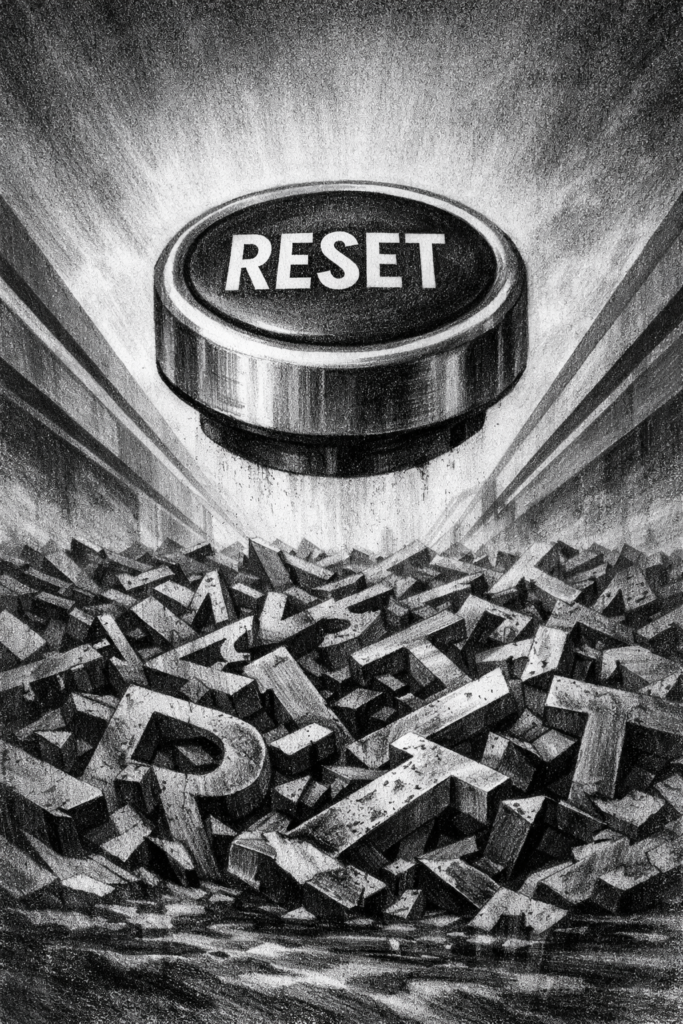
The answer usually depends on what I like to call the narrative reset.
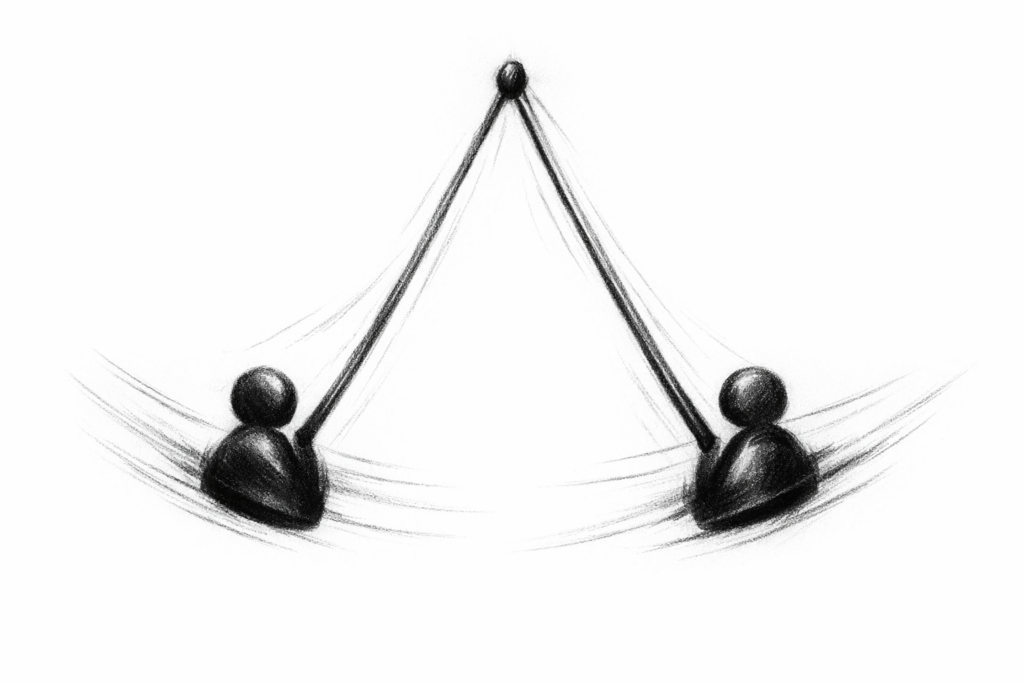
A scene break is a soft transition. It signals movement without demanding a full recalibration from the reader. You might shift locations, adjust the emotional tone slightly, or jump forward a few minutes in time.
A chapter break, by contrast, is a hard restart. It tells the reader that something fundamental has changed. The point of view may have shifted. The time frame may have advanced dramatically. The emotional stakes may have escalated.
In a digital reading environment, where many readers skim more aggressively than they once did, chapter breaks perform an additional function. They interrupt the scanning impulse. They force the eye to pause, absorb the chapter heading if one exists, and re-enter the narrative consciously.
Think of it as a moment where the reader’s attention is recalibrated.
Editors often call this attention integrity, the preservation of genuine engagement in an environment full of distractions. And sometimes the simplest way to preserve that engagement is the oldest structural trick in storytelling: End one chapter. Then begin another.
What Prose Can Learn from the Visual Storyteller
If you spend any time around writers who work in graphic novels or hybrid visual narratives, you’ll quickly discover that they don’t talk about chapters the way traditional prose writers do. They talk about sequences. A sequence isn’t measured in words. It’s measured in dramatic movement. One reveal leads to the next, panel by panel, page by page, until the reader hits the one moment that forces the page turn.
That page turn is the purest form of suspense. Prose writers sometimes forget that storytelling is, at its heart, visual. Even when nothing is drawn on the page, the reader is constructing images in their mind, scenes, gestures, flashes of realization. If you find your chapters sagging under their own weight, there’s a surprisingly simple exercise that many graphic storytellers use instinctively: storyboard the chapter.
Ask yourself what the defining images are. What is the moment the reader would remember if the chapter were adapted for television? What is the visual beat that carries emotional gravity? If you’ve written six thousand words and cannot identify a single moment that could exist as a powerful visual frame, chances are you’re not advancing the story; you’re circling it.
Modern readers are deeply visually literate. They’ve grown up on cinematic pacing, serialized streaming, and episodic storytelling. In many ways, the modern novel now competes with the rhythm of television seasons. That doesn’t mean prose must imitate film. But it does mean chapters should often feel like episodes, self-contained arcs that move the larger narrative forward.
When Editing Becomes Structural Surgery
By the time a manuscript enters its final revision stages, the question of chapter length often stops being a writing issue and becomes an editorial one. This is where the tension between global storytelling traditions and the commercial market tends to surface.
Writers working in European or Canadian literary traditions often favor chapters that wander a bit, chapters that allow room for reflection, philosophical detours, or atmospheric exploration. There’s nothing inherently wrong with that.
But the American commercial lens tends to focus on a single question: Where is the hook? Editors in the U.S. market often look for what might be called the tension peak inside a chapter. That moment where the emotional or narrative pressure reaches its highest point. Here’s where things get interesting.
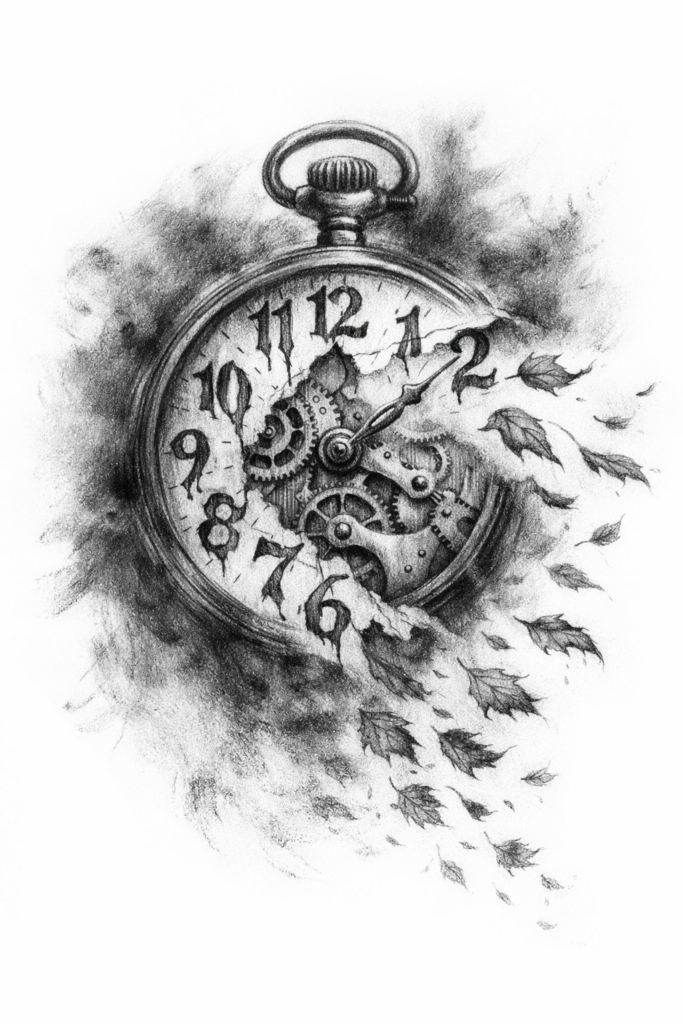
If that peak occurs in the middle of the chapter and the next three thousand words slowly wind down afterward, the chapter has effectively sprung a leak. The energy drains out of the narrative. One of the simplest structural solutions is also one of the most powerful: end the chapter at the peak. Move the aftermath into the opening of the next one.
It’s a small adjustment on paper, but it transforms the reading experience. The story stops feeling reflective and starts feeling propulsive. And that difference, between a book that people admire and a book that people can’t stop reading, often comes down to structural edit decisions like this.
The Hidden Economics of Young Readers
Young Adult and Middle Grade fiction operate under a set of pressures that many adult writers never consider. For one thing, a surprising portion of the Middle Grade market in the United States is still driven by read-aloud environments: classrooms, libraries, and bedtime routines. This means chapter length has a practical dimension.
If a chapter cannot comfortably be read in ten to fifteen minutes, it quietly removes itself from one of the most powerful distribution channels in children’s publishing. Teachers structure lessons around manageable narrative segments. Parents want to reach the end of a chapter before the lights go out.
A chapter that runs twenty pages may read beautifully on the page, but in that environment, it becomes a logistical obstacle. Young Adult fiction operates under a different kind of pressure, one shaped by the modern attention ecosystem. YA readers often interact with books socially. They quote lines online, share reactions, and clip dramatic moments for discussion on platforms like TikTok or Instagram. This changes the structural calculus.
A YA chapter benefits from impact density, moments sharp enough to be remembered, quoted, or discussed. A ten-thousand-word chapter may contain brilliant writing, but the moment that could have sparked a reaction risks getting buried inside the length. Brevity here isn’t a limitation; it’s a delivery system for emotional impact.
The Discipline of Non-Fiction Architecture
If fiction chapters operate on emotional momentum, non-fiction chapters operate on intellectual value. In the world of professional non-fiction, business books, technical guides, and leadership manuals, the chapter functions as a learning module. Readers approach it with a pragmatic mindset; they want to know what they’ll gain from the time invested.
An American professional reading a chapter on digital strategy or leadership development is often asking an unspoken question: “What is the return on these twenty minutes?” If the chapter is too brief, the reader senses superficiality. It feels like a teaser rather than a lesson. If it’s too long and poorly structured, the information becomes difficult to absorb.
The most effective non-fiction chapters achieve a kind of internal symmetry. Each one offers a clear concept, supports it with narrative or evidence, and leaves the reader with a practical takeaway. Consistency matters here. If the first three chapters run four thousand words and the fourth suddenly stretches to twelve thousand, the reader’s cognitive expectations collapse. The learning rhythm disappears, and once the rhythm disappears, comprehension soon follows.
The Writer as Time Architect
Ultimately, the question of chapter length circles back to something deeper than numbers or formatting. It comes down to time. When someone opens your book, they’re handing you a slice of their life: an hour on a commute, twenty minutes before bed, or a quiet Sunday afternoon. Your job as a writer isn’t just to fill that time; it’s to shape it.
Every chapter you write becomes a container for the reader’s attention, a brief shock that snaps them forward or a long immersion that pulls them deeper into a world.
Whether the chapter contains three words that change everything or twenty thousand words that build an entire universe, the choice must be intentional. Once a writer understands this, something subtle changes in the craft. You stop guessing. You stop wondering if the chapter “feels right.”
Instead, you begin conducting the story the way a musician conducts an orchestra. The narrative moves because you guide it. The tension rises because you allow it. And the chapters, those quiet structural decisions scattered through the manuscript, become the baton that keeps the entire symphony in motion.
The Hidden Mechanics of Story: How Genre, Emotion, and Editorial Eyes Shape the Life of a Chapter
Where Story Structure Meets the Marketplace
At some point in every writer’s professional life, the conversation about craft collides with something less romantic but equally important: the marketplace.
Stories may begin as acts of imagination, but once a manuscript enters the publishing ecosystem, it becomes part of a larger machine, one driven by readers, retailers, algorithms, and attention spans that fluctuate with the speed of modern life. This is where chapter structure starts intersecting with something writers rarely consider early in their careers: reader retention.
Over the past decade, the shift from print-first publishing to digital-first consumption has quietly reshaped the mechanics of narrative pacing. Platforms built around digital reading, most notably programs like Amazon Kindle Unlimited, measure engagement through a simple metric: pages read.
At first glance, that sounds like a business detail best left to publishers and accountants. In reality, it changes how stories breathe. If a chapter stretches too long without meaningful movement, readers don’t necessarily complain. They don’t always leave negative reviews or announce their dissatisfaction in public forums.
They simply stop. In the digital world, abandonment is silent. And silence, in this case, is devastating. When writers examine their chapters during revision, they are not only refining pacing; they are also conducting a kind of retention audit. Each chapter break becomes a small psychological milestone, the narrative equivalent of a checkpoint in a video game.
“Finish this section,” the book quietly suggests, “and you’ll feel accomplished enough to begin the next.” But if the next chapter looks intimidating, if it feels like an uphill climb rather than a step forward, the reader hesitates. And hesitation is the enemy of momentum.
Memoir and the Necessity of Emotional Depth
Not every genre, however, thrives on short structural bursts. Memoir operates under a completely different narrative contract. In memoir and personal essay collections, chapters function less like steps in a chronological staircase and more like gravitational centers of meaning. Each chapter circles a defining moment, a memory, a realization, or a fracture point in the author’s life.
Attempting to force these chapters into the brisk architecture of a thriller often produces something strangely hollow. The emotional weight never quite has time to settle. Readers of memoirs are not searching for speed. They are searching for truth, or at least the feeling of truth, the slow unraveling of an experience that reveals something deeper about the human condition.
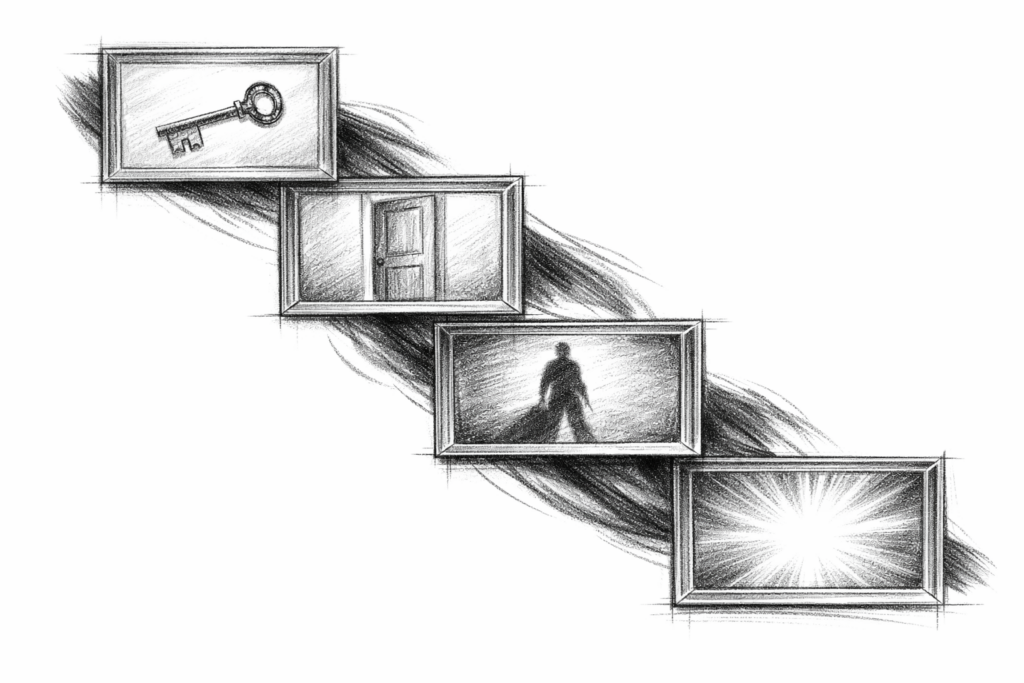
Sometimes that unraveling requires space. A six- or seven-thousand-word chapter devoted to a single formative memory may be exactly what the narrative demands. Break that memory into three smaller chapters simply to accelerate the pace, and the emotional continuity shatters. The reader no longer inhabits the moment; they skim across it.
For authors working in narrative non-fiction, especially memoir, the authority of the voice often becomes the foundation of their professional identity. The depth of insight is what builds reader loyalty, and sometimes the broader professional opportunities that follow, from speaking engagements to advisory roles. In that world, chapters that feel too brief can inadvertently signal something dangerous: not efficiency, but thinness.
Information Architecture in the Age of the Professional Reader
On the opposite end of the non-fiction spectrum sits the expanding universe of specialized professional literature. Books about productivity, finance, leadership, technology, and personal optimization are read under very different conditions. Often, they’re consumed by readers balancing multiple streams of attention: a notebook open beside them, a highlighter in hand, and a smartphone buzzing every few minutes.
This kind of reading demands something closer to information architecture than traditional storytelling. The chapter becomes a structured lesson. Each paragraph leads logically to the next, building toward a core takeaway that the reader can apply immediately. Clarity matters more than atmosphere. Precision matters more than literary flourish.
In this context, the appropriate length of a chapter is dictated entirely by the complexity of the concept being explained. If a topic, say, market volatility or behavioral finance, can be explained clearly in two thousand words, expanding it to four thousand merely to increase the overall page count becomes counterproductive.
Professional readers are remarkably sensitive to padding. And once they suspect that a writer is stretching ideas beyond their natural length, trust begins to erode. In a genre where credibility is the currency of influence, that erosion can be fatal.
Translating Story Across Cultures
There is one final dimension of chapter architecture that rarely receives the attention it deserves: cultural rhythm.
Storytelling traditions vary widely across the world. In many European, Middle Eastern, and Mediterranean literary traditions, narrative movement often follows a circular path. Chapters wander through memory, return to earlier images, and allow atmosphere to linger longer than plot.
The effect can be beautiful, hypnotic, even. But American readers have grown up inside a slightly different narrative tradition. The dominant rhythm in the United States tends toward linear propulsion. Stories move forward. Questions lead to answers, which lead to new questions.
The hook arrives early, and the narrative continues tightening around it. This difference doesn’t mean international writers must abandon their voice or reshape their identity to match another culture’s expectations. But it does mean that structure sometimes needs translation.
A long philosophical meditation that spans twelve thousand words might work beautifully in one literary tradition. In the American market, dividing that meditation into several interconnected chapters often provides readers with something essential: orientation. Each chapter becomes a small guidepost, a signal that the story is still moving. And when readers feel guided rather than lost, they are far more willing to follow a writer into unfamiliar territory.
Where Craft Replaces Instinct
Every manuscript eventually reaches a stage where enthusiasm must step aside, and discipline takes the wheel. Writers often call this the revision phase. Editors tend to call it something slightly more surgical: the structural edit.
This is the moment when the manuscript stops being a private act of creativity and becomes a piece of architecture. The emotional attachment to certain passages has to be balanced against a harder question: Does the structure actually serve the story?
When experienced editors examine a manuscript at the macro level, one pattern appears again and again: The opening third of the book contains chapters that are twice the length of those near the end. It’s not a mystery why. At the beginning, the author is still discovering the world of the story, testing voices, building context, and circling around the characters before finally locking into the narrative rhythm. By the time the final act arrives, the writer knows the terrain, and the chapters suddenly tighten.
The result is what editors sometimes describe as a front-heavy manuscript. There’s nothing wrong with discovery in early drafts; in fact, it’s often essential. But in the professional revision stage, the structure must evolve toward something more deliberate, what might be called a symmetry of intent.
This doesn’t mean every chapter should match its neighbor in length. Far from it. Variation is healthy. Sometimes a chapter needs to be short, sharp enough to land like a sudden knock on the door. Other times, it must stretch longer, allowing the complexity of a moment to unfold without interruption.
The key distinction is intention. A short chapter should feel like a choice. A long chapter should feel necessary. Anything else begins to resemble drift.
There’s another structural consideration that rarely receives attention during the drafting phase but becomes crucial once a book enters the retail ecosystem. On most digital storefronts, readers can preview a portion of the book before purchasing. This feature, sometimes called the “look inside” window, often contains the first ten percent of the manuscript.
In other words, the opening chapters function as the book’s silent audition. If those first pages are dominated by a sprawling prologue or a chapter that stretches endlessly before anything meaningful happens, the story is effectively hiding behind its own introduction. Readers browsing online are not patient archaeologists. They are curious, but they are also cautious with their time.
Many professional writers address this reality with a simple structural strategy. The early chapters tend to be shorter, more concentrated, and slightly faster in rhythm. These chapters establish voice, introduce tension, and invite the reader into the world without demanding too much endurance up front.
As the reader becomes invested, once the characters begin to matter, the structure can gradually expand. Chapters grow longer, scenes breathe more deeply, and the narrative settles into its full pace. Think of it as narrative onboarding. The reader is stepping into unfamiliar territory; your early chapters act as the guide.

The Silent Conversation Between Writer and Reader
By the time a manuscript reaches its final form, the writer has made hundreds of structural decisions, most of them invisible to anyone who isn’t actively studying the craft. But readers feel those decisions. They feel them in the rhythm of the pages, in the moment a chapter ends exactly where curiosity spikes, and in the quiet satisfaction of finishing one section and immediately starting another.
Chapter length, in that sense, becomes a kind of silent language. It tells the reader when to slow down, when to brace themselves, and when to lean forward. A two-hundred-word chapter can hit like a lightning strike. A twenty-thousand-word chapter can create a sense of immersion so complete that the outside world disappears. Neither is inherently better; both are tools. And like any good tool, their effectiveness depends on the hands using them.
In the end, writing a book isn’t simply the act of telling a story. It’s the act of shaping attention. Every page competes with the distractions of the modern world: phones lighting up, messages arriving, and entire streaming libraries waiting a few inches away on the same screen. A writer who understands chapter architecture understands how to guide a reader through that landscape, not by force, but by rhythm.
When the geometry of the narrative finally clicks into place, when chapters expand and contract with the emotional logic of the story, the book begins to move with its own momentum. At that point, the writer is no longer chasing the expectations of the market; they’re doing something more interesting: they’re conducting the experience.
And the chapter, so often treated as a simple organizational device, reveals its true purpose. It isn’t a container for the story; it’s the spark that keeps the story alive.
And perhaps this is the point where the conversation pauses, not because the mechanics of storytelling have been fully mapped, but because every manuscript that lands on a writer’s desk redraws the map in its own peculiar way. The rhythm shifts, the chapters breathe differently, and the writer finds themselves listening again for that quiet signal that a scene has reached its natural edge. Craft never truly concludes; it simply moves on to the next experiment, the next structure, the next question waiting patiently somewhere in the margins.
Because in the life of a story, the final line is rarely an ending, only the moment before the next page begins.