

–
By: Jeff Mayer —————————————————————————————————————Updated: Mar 14, 2026
Most people think nonfiction is the safe neighborhood of publishing. No monsters under the bed, no ghosts rattling chains in the hallway. Just facts, dates, and respectable sentences behaving themselves.
But the strangest identity crisis in the whole neighborhood lives right in the “self” section.
Inside This Masterclass: Autobiography, Biography, and Memoir
-
The Three Engines: Identifying whether you are driving an Autobiography, Biography, or Memoir.
-
The Vulnerability Tax: Why your failures are more interesting to readers than your successes.
-
Authoritative Narrators: Distinguishing between the “Reporter” in Autobiography and the “Philosopher” in Memoir.
-
Strategic Authorization: The trade-offs between authorized access and the “unauthorized” market power.
-
The Ghostwriter Illusion: Creating authentic intimacy through professional narrative craftsmanship.
-
The Grace of Memory: Understanding narrative license versus the “bright red line” of fabrication.
-
Psychological Autopsy: How modern biography uses setting and pacing to reconstruct a real life.
Writers show up with manuscripts they swear are memoirs. Then I read them and realize they’re really just a résumé wearing a bathrobe, achievement after achievement marching past like soldiers in a parade. On the other side of the desk, you’ve got biographers digging so deep into someone’s emotional life, you’d think they were writing a novel.
Here’s the thing: in the publishing world, especially now, in the jittery marketplace, the difference between autobiography, biography, and memoir isn’t some dusty debate professors argue about over bad coffee. It’s a business decision. It’s about where your book sits on the shelf and who reaches for it.
And shelves matter.
When you write about a life, your own or someone else’s, you’re making a quiet little deal with the reader. A contract. The deal says: “This really happened.” But truth is slippery stuff. Editors know it. Writers know it. Memory is less like a photograph and more like an old movie reel that’s been spliced together a dozen times.
The American market, still the big engine pulling the nonfiction train, has changed its taste over the last ten years. Readers don’t want the marble statue version of a life anymore. They want the messy kitchen at two in the morning. They want the moment someone almost fell apart but didn’t.
That means if you want to tell a life story, you’ve got to understand the machinery first. Autobiography, biography, memoir, three different engines under the hood. If you don’t know which one you’re driving, you’ll stall halfway down the road.
The Autobiography
Autobiography is the old-school model. The formal suit and tie of life writing.
Traditionally, it’s written by people who’ve already done something big enough that the world thinks their whole story deserves a record. Presidents. Industry giants. Cultural heavyweights.
When Benjamin Franklin sat down to write about his life, he wasn’t chasing a clever narrative theme. He was laying down a blueprint. A step-by-step account of how a life, and in some ways a nation, got built.
In an autobiography, the word “I” carries authority. The reader expects the long view: family roots, childhood, the slow climb through the years, and finally the big public moments. It’s legacy writing. But here’s the trap.
A lot of modern writers think autobiography means dumping facts on the page like coins from a jar. It doesn’t. Even the most factual autobiography is still a performance, carefully arranged, carefully lit.
When Nelson Mandela wrote Long Walk to Freedom, he wasn’t just telling what happened. He was shaping a national myth and a personal one at the same time. And that leads to the real problem with autobiography today: readers already know it’s biased.
They know the story is coming straight from the horse’s mouth, and horses, like people, tend to remember themselves looking pretty good. The author is usually the hero. If not the hero, at least the most reasonable person in the room. That doesn’t make autobiography dishonest. It just means the writer has a balancing act to perform.
You have to present the official record of your life while quietly admitting that memory is a foggy mirror. Clear in places, warped in others. If you’re a public figure, writing an autobiography is something like taking back your own story from the chaos of the internet, the gossip, the headlines, the half-truths bouncing around social media.
Think of it this way: Your autobiography isn’t just your life story. It’s the authorized version. The one you sign your name to.
The Memoir
If an autobiography is a big old mansion with too many rooms to count, the memoir is something smaller and stranger. Think of it as a single room with the lights turned all the way up. That room might be messy. There might be broken furniture in the corner and a window that won’t quite close. But everything inside it matters. Everything inside it is there for a reason.
Memoir is the fastest-growing neighborhood in life writing, and also the one people misunderstand the most. Writers come in thinking they’re supposed to tell their whole life story. That’s autobiography territory.
A memoir doesn’t try to tell the whole life. It tells one piece of it that mattered.
Autobiography asks: What happened?
Memoir asks something tougher: What did it mean?
That difference may sound small, but in the publishing world, it’s the difference between a book that sits politely on the shelf and a book that people actually pass to their friends. In a memoir, the facts are important, sure, but they’re not the boss of the story. The theme is. Maybe it’s grief. Maybe addiction. Maybe the slow-motion train wreck of a career that didn’t go the way you thought it would.
You might have lived through a thousand fascinating moments. That doesn’t mean they all belong in the book. If a scene doesn’t serve the heart of the story, it has to go. No mercy. Cut it like a bad scene from a movie. Memoir, more than any other kind of nonfiction, steals its tricks from the novel.
You need a narrative arc. You need tension. You need a character the reader can follow through the dark, and that character is you. But the most important ingredient is change. The reader wants to see who you were when the story started and who you became after the dust settled.
When people read books like The Liars’ Club by Mary Karr, or I Know Why the Caged Bird Sings by Maya Angelou, they’re not looking for a tidy encyclopedia entry. They’re looking for recognition. They want to see the scars.
That’s the secret reason memoir took over the life-writing world in the 21st century. It lets readers get closer than the polished, ceremonial voice of autobiography ever could. Memoir opens the door and lets them walk straight into the room. But intimacy has a price tag. I sometimes call it the Vulnerability Tax.
If you want to write a memoir that works, you have to be willing to be the most flawed person in the entire book. You can’t hide behind job titles or awards or the size of your accomplishments. In fact, and this surprises a lot of writers, your accomplishments are often the least interesting thing about you.
Readers, especially in the U.S., have a finely tuned authenticity radar. They can smell a self-congratulatory memoir the way a dog smells a steak across the street. Usually by the end of the first chapter. So if you’re not willing to take apart your own failures piece by piece, really look at them, really understand them, you’re not writing a memoir. You’re writing an autobiography in disguise. And readers are very good at spotting disguises.
Autobiography and memoir both use the same narrator. The same little word standing at the front of the sentence:
I.
But they put that word to work in very different ways. In an autobiography, I behave like a reporter. It looks back over the years with a clipboard in hand, checking dates, lining up events, trying to give you the official account of what happened.
In a memoir, the I is doing something quieter and stranger. It’s less reporter, more philosopher. Less interested in the calendar, more interested in the question that keeps a person awake at three in the morning:
What did all that mean?
That difference shows up most clearly in the way the story moves through time. Autobiography usually marches forward like a parade. Childhood, adolescence, early career, big break, legacy years. One step after the other. Nice and orderly. It respects the clock. Memoir doesn’t care nearly as much about the clock.
A memoir might start in the middle of the storm and only later explain how the clouds gathered. It jumps backward, sideways, sometimes decades at a time. Memory doesn’t move in straight lines, and memoir is honest enough to admit that.
Real life isn’t a timeline. It’s a map of emotional landmarks, high points, low points, the moments that burned themselves into your brain, whether you wanted them there or not. That’s one big reason modern readers love memoir so much. It feels like the way memory actually works: messy, human, a little unpredictable.
Now, when we step into the third form, biography, something fundamental changes.
The narrator stops saying I. Suddenly, we’re hearing he or she.
And that small grammatical shift changes the entire nature of the truth we’re dealing with. Autobiography and memoir are acts of memory. Biography is something else entirely. Biography is an investigation.
The Biography
If a memoir is a long look in the mirror, a biography is a shovel in the dirt. You’re digging.
The moment the narrator switches from I to he or she, the balance of power changes between the writer, the subject, and the reader. The writer is no longer the witness to their own life. They become something closer to a judge, or maybe a detective.
The reader’s question changes, too.
Memoir asks: How did it feel?
Biography asks: What actually happened?
And in the American nonfiction market, that difference matters. A lot. Biographies of figures like Steve Jobs or Elon Musk don’t just sell books, they shape the way a culture understands its heroes and troublemakers.
Because of that, a biography isn’t judged only by how well it’s written. It’s judged by the weight of the evidence. At its core, a biography is a reconstruction job. The writer gathers fragments, diaries, letters, interviews, court records, newspaper clippings, old photographs, and half-remembered stories told by people who may or may not be telling the whole truth.
Piece by piece, those fragments turn into a life. Unlike autobiography, which leans on the authority of memory, biography leans on something colder and harder: the authority of the source.
That’s why professional biographers sometimes spend years buried in archives before they write the first sentence. They’re gathering proof. For the writer who takes this path, the investment is steep, time, research, and intellectual energy. But the reward is different from a memoir or an autobiography. Biography carries the quiet prestige of history.
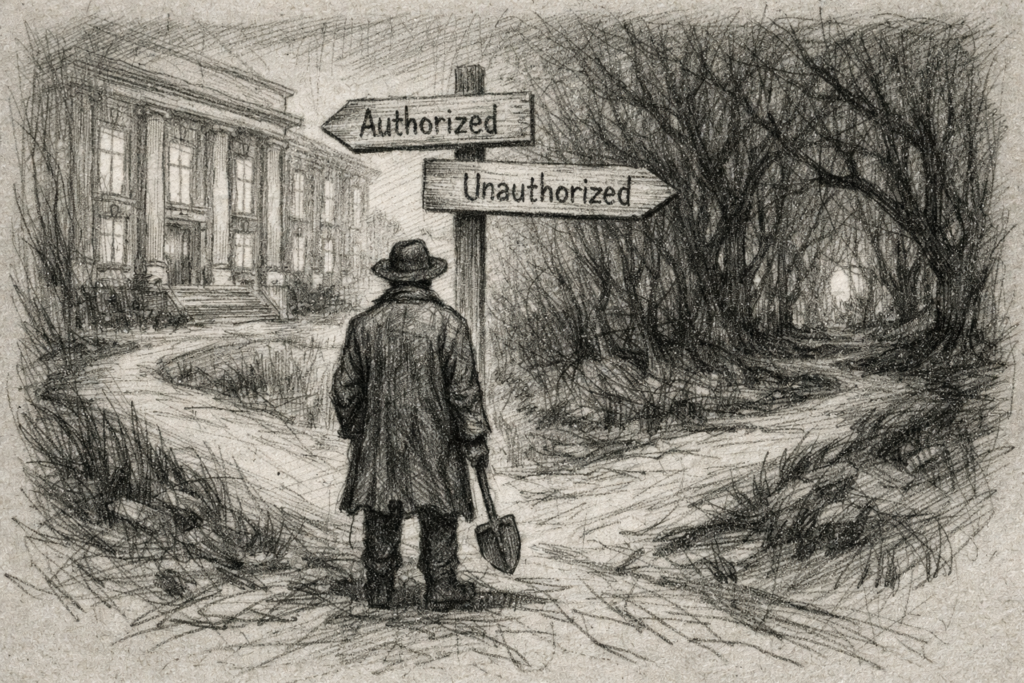
Sooner or later, every biographer runs into a fork in the road. Do you ask for permission? Or do you write the book without it? That choice, authorization or no authorization, isn’t just a technical detail. It’s a strategic decision that affects everything: access, tone, and even how the book will be marketed.
The Authorized Biography
This is the partnership model. The subject, or sometimes their estate, opens the door. Private letters, family archives, interviews with people who normally keep their mouths shut. The writer gets access that most researchers only dream about. In exchange, there’s usually an expectation floating in the air. Sometimes it’s spoken, sometimes it isn’t.
The portrait should be… sympathetic. For publishers, an authorized biography of a major figure can feel like a safe investment. It comes stamped with a kind of institutional seal of authenticity. But there’s a professional hazard here. It’s what I like to call the “hagiography trap”, when the biographer stops being a historian and slowly turns into a public relations agent for the dead. And once that happens, the book loses its bite.
The Unauthorized Biography
Here, the writer stands outside the gate. No official blessing. Sometimes, there is no cooperation at all. Access to private material may be limited, but the label itself, “unauthorized”, has a strange kind of power in the marketplace. It signals to readers that the gloves might come off.
Those books often sell extremely well. They promise the story without the polish, the version that might not make it into the official record. But that freedom comes with its own dangers. Legal ones, for starters. In a world where reputations are valuable, and lawyers are plentiful, an unauthorized biographer has to check every claim twice, sometimes ten times, to avoid stepping into the quicksand of libel.
Because when you promise readers the unvarnished truth, you’d better be ready to prove it.
There was a time when a biography read like a calendar that refused to end. Year after year. Event after event. A long march of facts that might have been accurate but rarely felt alive. Those days are mostly behind us. Modern biography works differently. It borrows a few tricks from fiction, the good ones. The kind that pulls a reader forward instead of letting them drift away.
You can see it in the work of biographers like Walter Isaacson or Robert Caro. When they write about someone, they don’t just tell you the date of a birth. They build the world around it. Take Lyndon B. Johnson.
A lesser biography might say he was born in Texas and move on. But the good ones take you into the Texas Hill Country itself. You feel the dry heat, the rough terrain, the sense of isolation. And slowly, you begin to understand how a place can shape a person.
Setting matters. Pacing matters. Even dialogue, carefully reconstructed from letters, transcripts, and interviews, can matter. Put it all together, and the biography stops feeling like a report. It starts feeling like a story. For the professional writer, that means developing a strange kind of double vision. One eye belongs to the historian; the other belongs to the novelist.
You have to be as careful with your sources as an academic scholar, but just as attentive to narrative tension as a storyteller. Because what you’re really hunting for is something fiction writers understand instinctively: the character arc.
Only this time, the character is real. You’re looking for the fatal flaw. The quiet ambition nobody noticed at first. The pressure, political, cultural, personal, that slowly shaped the public figure everyone thinks they already understand. Readers in the American nonfiction world, especially the kind who spend their Sundays with The New York Times or The New Yorker, aren’t satisfied with a simple chain of events anymore. They want something deeper.
You might call it a psychological autopsy of a life.
In biography, new information is currency. Sometimes it’s a forgotten letter buried in an archive. Sometimes it’s a familiar event seen through a new lens, a better understanding of trauma, power structures, or cultural pressures that people in the past never had the language to describe.
But if your subject is still alive, or recently alive, you run into a different problem: noise. Modern public figures generate oceans of data. Interviews, podcasts, tweets, speeches, posts, recordings, comments. Millions of tiny fragments scattered across the digital landscape.
The biographer’s job isn’t simply to collect them. It’s to curate them. You sift through the performance of public life and try to find the private reality hiding underneath. This is where biography separates itself most sharply from autobiography. When people write their own stories, they control the spotlight. They decide which scenes deserve attention and which ones fade quietly into darkness.
A biographer doesn’t always have that luxury. If you discover something important, something that reveals character, motive, or consequence, you’re professionally obligated to include it, as long as it serves the narrative truth. That tension creates the peculiar electricity of biography. Because in the end, biography is always wrestling with the same question:
Who owns the story of a life?
Not every life demands eight hundred pages. And readers know it. There’s growing interest in shorter, sharper forms of biography, books that focus less on total coverage and more on insight. Sometimes it’s a concise “life in brief.” Sometimes it’s a collective portrait: several lives examined through a single theme.
Imagine a book about five artists who shaped American modernism. Or five innovators who transformed technology. Each life becomes a different angle on the same idea. For writers, this format offers something valuable: speed.
You can explore personality, history, and influence without committing ten years to a monumental “definitive biography.” And for readers, it fits the rhythm of modern life. The ability to absorb a complex story in the time it takes to fly from New York City to London has its own appeal. You might call it high-density insight.
Writing about the living can feel like walking through a legal minefield. Egos are involved. Reputations are fragile. Lawyers are never very far away. But writing about the dead comes with its own complications. Legacies are protected. Estates guard archives. Families worry about how history will remember someone they loved.
The biographer stands in the middle of all this. Whether they want to or not, they become a steward of someone’s reputation. That responsibility forces a difficult question: Am I being fair to the time this person lived in?
It’s easy to judge the past using the moral vocabulary of the present. Historians call that “presentism,” and it’s one of the quickest ways to flatten a life into something simplistic. A good biography does the opposite. It builds a bridge across time. It helps readers understand why a person made the choices they did inside the world that actually existed around them.
In the end, biography is a strange combination of two things that don’t always sit comfortably together: empathy and evidence. It’s the most external form of life writing, the farthest vantage point from the voice of “I.” And yet, when it works, it can reveal truths the subject themselves might never have fully understood.
Because biography looks at a life from a different place. Not from inside the valley of memory, but from somewhere higher up the mountain, where the whole landscape finally comes into view.
If you spend enough time around publishing, especially the kind that lives in tall buildings south of Central Park, you start to notice something. A lot of the voices on the page aren’t the voices that actually did the typing. Walk into any bookstore in the United States and wander over to the memoir section. You’ll see athletes, actors, politicians, influencers, founders, survivors, astronauts, and chefs. Every one of them is promising a personal story.
And sometimes it is personal. But not always personal in the way readers imagine. Inside our office, nobody treats ghostwriting like a scandal. It’s just another tool in the box. A quarterback can throw a football sixty yards downfield. A CEO can run a multinational company.
But writing a compelling narrative, one that keeps a reader turning pages at midnight, that’s a different skill entirely. It takes practice. Years of it. Sometimes decades. That’s where the ghostwriter comes in. Think of the process like a strange kind of translation. The subject supplies the raw material: memories, experiences, emotional scars, the strange little details that make a life feel real.
The writer turns that material into a story. Structure. Momentum. Scenes that feel like they’re happening right now. The best ghostwriters disappear completely. Their job isn’t to sound like themselves. Their job is to sound like the person whose name is printed in forty-eight-point type across the cover. It’s a little like method acting, except the stage is a manuscript. And when it works, nobody notices.
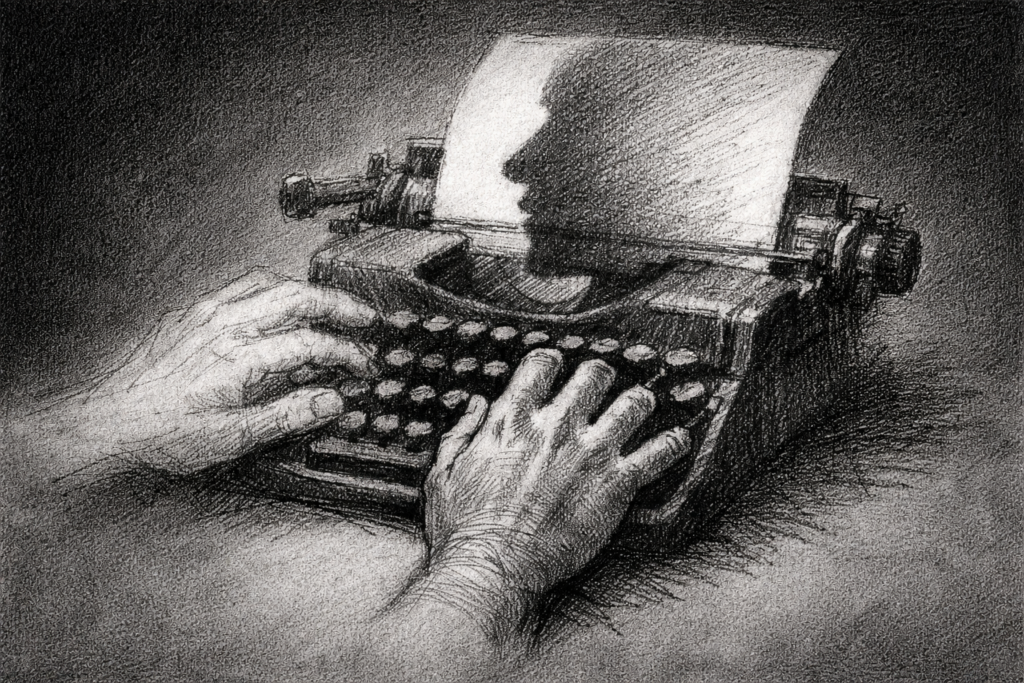
Here’s the strange thing about autobiography: When readers buy a memoir, they aren’t just buying information. They’re buying intimacy. They expect the person on the cover to be talking directly to them. The ghostwriter’s job is to create that illusion so perfectly that the reader never sees the machinery behind the curtain. Sometimes the arrangement is hidden. Sometimes it’s acknowledged.
You’ve probably seen the formula on book covers:
“By [Famous Person] with [Actual Writer].”
That small word, with, is publishing’s polite way of saying: Two people built this house.
Over the last decade, the American market has become more comfortable admitting that. Readers understand that storytelling is a craft, and not everyone who has lived an extraordinary life is also happens to be a professional writer. Transparency, it turns out, builds trust. And trust is the currency memoirs run on.
If you want to understand why publishers are so careful about truth today, you have to rewind the tape to the early 2000s. Back then, a memoir called A Million Little Pieces exploded onto the scene. Raw. Brutal. Addictive in the way only confession can be. Its author, James Frey, told a story about addiction and survival that millions of readers believed was completely real.
Then the cracks started to show. Investigations revealed that some of the most dramatic events in the book had been exaggerated or simply invented. The fallout reached a strange cultural peak when Frey appeared on The Oprah Winfrey Show and faced a very public reckoning with Oprah Winfrey.
The publishing world watched that moment like a town watching a building collapse. Because in a way, it was. The memoir boom had been running on trust. And suddenly, that trust looked fragile. Editors, lawyers, fact-checkers, everybody started asking harder questions.
Here’s where things get complicated. Memory isn’t a video recording. Anyone who’s tried to remember a conversation from twenty years ago knows that. Details blur. Dialogue shifts. Two separate events start to merge into one. Memoirists are given a little breathing room for that. In the trade, we call it the “grace of memory.“
You can compress time. You can combine minor characters. You can reconstruct dialogue that captures the spirit of a moment. That’s narrative license. But there’s a bright red line you don’t cross: You cannot invent the earthquake if the ground never shook. You cannot put yourself in the burning house if you were standing safely across the street.
Once you start fabricating major events, you’re not writing a memoir anymore. You’re writing fiction wearing a stolen badge. And in the publishing world, getting caught doing that is about as close to professional self-destruction as a writer can come.
Because of the lessons learned after the Frey scandal, many memoirs now go through a process that looks suspiciously like investigative journalism. Publishers want receipts. Old emails. Medical records. Court documents. Letters. Photos. Anything that helps confirm that the story being told actually happened.
Some manuscripts even pass through legal review before they go to print. Not because publishers enjoy paperwork, nobody in publishing enjoys paperwork, but because reputations are fragile things. One fabricated scene can destroy an entire career. And careers in writing take a long time to build.
At the end of the day, memoir sits in a strange middle space. It’s not pure history. But it’s not fiction either. Think of it like a bridge. On one side is lived experience, the chaotic, messy sprawl of real life. On the other side is narrative, the clean architecture of a story that readers can follow from beginning to end.
The memoirist walks that bridge carrying two responsibilities at once. One to storytelling. The other truth. Lean too far toward storytelling, and you risk invention. Lean too far toward documentation, and the book becomes a police report. The art lies in balancing both.
And when it works, when the voice feels honest, the memories feel earned, and the narrative moves like a train through the dark, you get something rare. Not just a record of a life.
But a life that suddenly makes sense.